Disclosure: We earn commissions on purchases made through our links. This never influences our scores. Editorial policy
Sea Moss (Irish Sea Moss)
Bottom line
In our scoring, Sea Moss (Irish Sea Moss) rates ineffective and the evidence does not back the core claim. Bottom line: we do not score brands for an ingredient this weak. This is our opinion, not medical advice; talk to your clinician before starting.
Sea moss is one of the biggest supplement trends of the decade, and one of the clearest examples of marketing far outrunning evidence.
- Evidence
- Ineffective
- Category
- Herbal & Botanical
- Best form
- products third-party tested for heavy metals (the key safety signal)
- Effective dose
- No established effective dose
- Lab tested
- 2 of 5 products
- Category
- Herbal & Botanical
- Best form
- products third-party tested for heavy metals (the key safety signal)
- Effective dose
- No established effective dose
- Lab tested
- 2 of 5 products
Key takeaways
- →There are essentially no human trials showing sea moss does what it is sold for (thyroid, immunity, skin, weight, '92 minerals'). The evidence is not there.
- →It carries two real risks: highly variable, potentially excessive iodine (thyroid harm, with published case reports) and heavy-metal accumulation (arsenic, lead).
- →We do not see an evidence-based reason to take it. If you try it anyway, the only meaningful quality signal is third-party heavy-metal testing - Double Wood is the best-executed on that front here.
- →Especially risky if you have a thyroid condition, take thyroid medication, or are pregnant or breastfeeding.
What Is Sea Moss (Irish Sea Moss)?
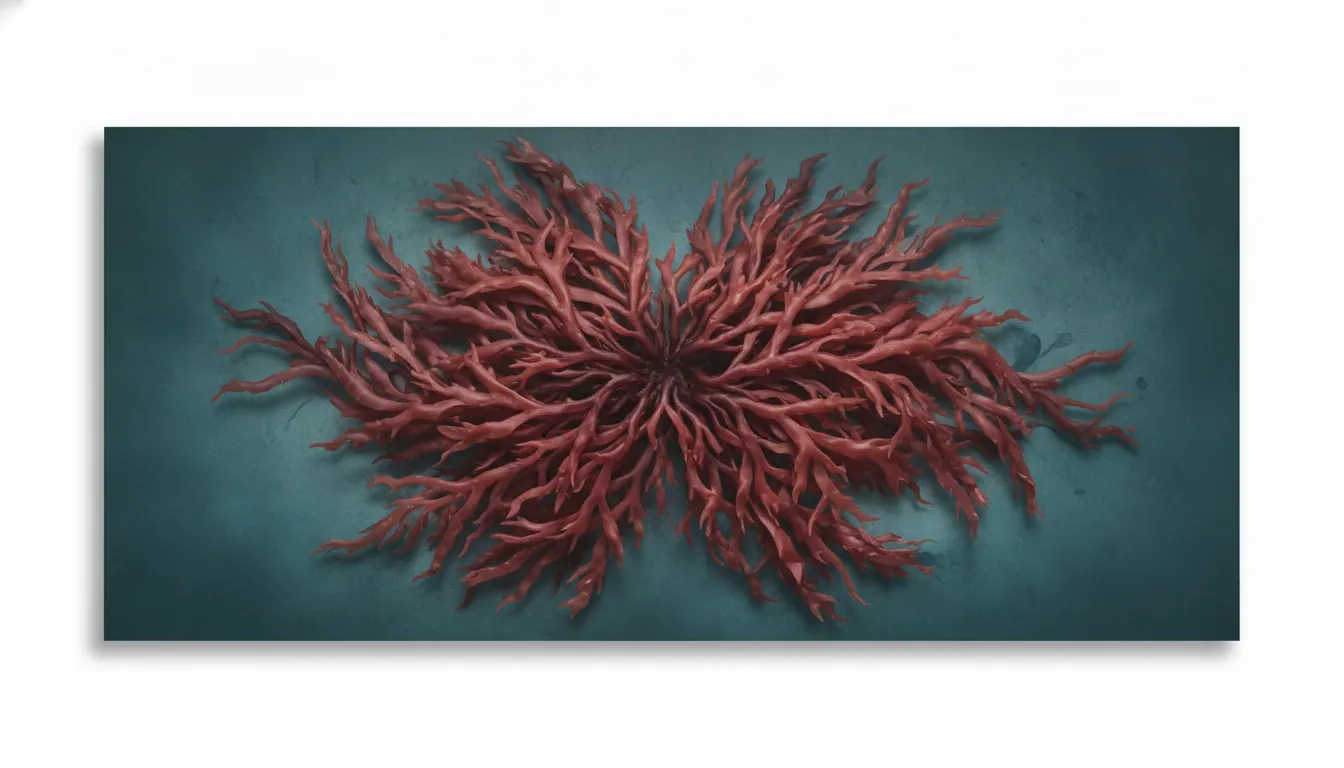
Sea moss is one of the biggest supplement trends of the decade, and one of the clearest examples of marketing far outrunning evidence. It is a red seaweed (Irish sea moss is Chondrus crispus; much of what is sold is actually the warmer-water look-alike Gracilaria), and it genuinely contains a range of minerals. But the honest, evidence-based verdict is blunt: there are essentially no human trials showing it does the things it is sold for, and it carries two real, documented safety concerns. This is a case where "the evidence is insufficient" is the accurate finding, not a dodge.
The claims are sweeping - thyroid support, immunity, gut health, glowing skin, energy, weight loss, "92 minerals your body needs" - and almost none are backed by studies in people. The "92 minerals" figure is a marketing line, not the result of a controlled analysis of finished products, and experts point out there is no way to verify what any given batch actually contains. A handful of tiny studies and in-vitro (test-tube) work hint at prebiotic or antioxidant activity, but nothing that establishes a real-world human benefit. Major medical centers reviewing sea moss reach the same conclusion: interesting nutritional profile, unproven benefits.
The safety side is where sea moss earns real caution rather than a shrug. First, iodine: seaweed's iodine content is enormously variable and can be excessive, and too much iodine can disrupt thyroid function, trigger or worsen autoimmune thyroid disease, and cause iodine-induced thyroid problems - there are published case reports of exactly this from seaweed supplements. Anyone with a thyroid condition, on thyroid medication, pregnant, or breastfeeding should be especially careful. Second, heavy metals: seaweed bioaccumulates arsenic (including the toxic inorganic form), lead, mercury, and cadmium from seawater, which is why third-party heavy-metal testing is the single most important quality signal in this category.
So where does that leave a buyer? Our honest position is that we do not see an evidence-based reason to take sea moss, and there are cheaper, better-studied ways to get minerals and support your gut. If you are going to try it anyway, the harm-reduction move is to choose a product that is third-party tested for heavy metals, prefer a single named species over a multi-seaweed blend that stacks iodine sources, and keep the dose modest - especially if your thyroid is anything but bulletproof.
Does It Work? The Evidence
How A-F grades workSea Moss (Irish Sea Moss) earns an Ineffective rating: the evidence does not support its primary claimed purpose. We still grade the individual claims below, but we don't score brands for an ingredient that doesn't work.
Excess iodine from sea moss can harm the thyroid
Blikra et al. 2024 and 2022 (reviews of excess iodine from seaweed) and Gherbon et al. 2019 (case report of transient hyperthyroidism after a kelp/seaweed supplement) document real iodine-related thyroid risk
Seaweed can accumulate heavy metals (arsenic, lead, mercury)
Yokoi et al. 2012 documented toxic inorganic arsenic in hijiki seaweed; the bioaccumulation mechanism applies to sea moss, which is why third-party heavy-metal testing matters
Boosts immunity
Only in-vitro and animal signals (antioxidant, antimicrobial); no human trials show sea moss improves immune outcomes
Improves gut health (prebiotic)
In-vitro fermentation studies and a few very small human studies hint at prebiotic potential, but nothing confirms a meaningful real-world gut benefit
Supports thyroid health
No human trials support a thyroid benefit; sea moss's variable, potentially excessive iodine content makes self-dosing for the thyroid actively risky rather than helpful
Provides '92 minerals', detox, weight loss, and skin benefits
These are marketing claims with no controlled human evidence; the '92 minerals' figure is not from a verified analysis of finished products
| Grade | Claimed Benefit | Key Studies | Our Verdict |
|---|---|---|---|
| B | Excess iodine from sea moss can harm the thyroid | Blikra et al. 2024 and 2022 (reviews of excess iodine from seaweed) and Gherbon et al. 2019 (case report of transient hyperthyroidism after a kelp/seaweed supplement) document real iodine-related thyroid risk | Supported |
| B | Seaweed can accumulate heavy metals (arsenic, lead, mercury) | Yokoi et al. 2012 documented toxic inorganic arsenic in hijiki seaweed; the bioaccumulation mechanism applies to sea moss, which is why third-party heavy-metal testing matters | Supported |
| D | Boosts immunity | Only in-vitro and animal signals (antioxidant, antimicrobial); no human trials show sea moss improves immune outcomes | Not There Yet |
| D | Improves gut health (prebiotic) | In-vitro fermentation studies and a few very small human studies hint at prebiotic potential, but nothing confirms a meaningful real-world gut benefit | Not There Yet |
| F | Supports thyroid health | No human trials support a thyroid benefit; sea moss's variable, potentially excessive iodine content makes self-dosing for the thyroid actively risky rather than helpful | Not There Yet |
| F | Provides '92 minerals', detox, weight loss, and skin benefits | These are marketing claims with no controlled human evidence; the '92 minerals' figure is not from a verified analysis of finished products | Not There Yet |
Sea Moss (Irish Sea Moss) Dosage: How Much to Take
Sea Moss (Irish Sea Moss) dosage, in one line: the evidence-supported range is No established effective dose; products typically provide 1,000-3,000 mg/day, but no human trials define an effective amount.
Clinical dose: No established effective dose; products typically provide 1,000-3,000 mg/day, but no human trials define an effective amount
Best forms: products third-party tested for heavy metals (the key safety signal), single-ingredient over multi-seaweed blends, a clearly named species (Chondrus crispus or Gracilaria)
There is no evidence-based dose, because there are no efficacy trials - so any dosing guidance is guesswork. If you choose to use it, keep the amount modest, use a product that publishes third-party heavy-metal testing, and do not treat it as a thyroid remedy. Gel forms are made from raw seaweed and are the most variable in content; capsules at least give a fixed weight, though not a fixed iodine or mineral amount. Watch for any signs of thyroid disturbance (racing heart, anxiety, weight changes) and stop if they appear.
Who Should Take Sea Moss (Irish Sea Moss)?
Honestly, we do not have an evidence-based population to recommend this to - the human trials that would justify taking sea moss for thyroid, immunity, gut, or skin simply do not exist. If you are set on trying it for personal reasons, the harm-reduction approach is to pick a product that is third-party tested for heavy metals, choose a single named species over a multi-seaweed blend, keep the dose modest, and treat any benefit as unproven. There are cheaper, better-studied ways to get minerals and support your gut.
Who Should Avoid It?
Not for everyone
Side Effects & Safety
Product Scores
5 products scored on dosing accuracy, third-party testing, cost per effective dose, and label transparency.
We don't score brands for this ingredient because the clinical evidence does not support its effectiveness. A well-made pill of an ineffective ingredient is still ineffective.
Irish Sea Moss Capsules
Double Wood
We don't score brands for this ingredient because the clinical evidence does not support its effectiveness. A well-made pill of an ineffective ingredient is still ineffective.
$19.95 for 90 servings
Price checked 2026-07-06
Irish Sea Moss Extract Capsules
NutricostWe don't score brands for this ingredient because the clinical evidence does not support its effectiveness. A well-made pill of an ineffective ingredient is still ineffective.
$18.95 for 120 servings
Price checked 2026-08-16
3-in-1 Irish Sea Moss (with Bladderwrack + Burdock)
NatureBell
We don't score brands for this ingredient because the clinical evidence does not support its effectiveness. A well-made pill of an ineffective ingredient is still ineffective.
$18.95 for 120 servings
Price checked 2026-08-16
Raw Wildcrafted Sea Moss (dried)
Organics Nature
We don't score brands for this ingredient because the clinical evidence does not support its effectiveness. A well-made pill of an ineffective ingredient is still ineffective.
$21.59 for 30 servings
Price checked 2026-08-16
Wild Irish Sea Moss 4-in-1
MAJU Superfoods
We don't score brands for this ingredient because the clinical evidence does not support its effectiveness. A well-made pill of an ineffective ingredient is still ineffective.
$37.00 for 120 servings
Price checked 2026-07-06
Product prices and availability are accurate as of the date indicated and are subject to change. Any price and availability information displayed on Amazon.com at the time of purchase will apply.
Frequently Asked Questions
Does sea moss actually work?
For the benefits it is marketed for - thyroid, immunity, gut health, skin, weight loss - there are essentially no human trials showing it works. Most claims trace to its mineral content, test-tube studies, or marketing (the '92 minerals' line is not from a verified analysis of finished products). Major medical centers that have reviewed sea moss reach the same conclusion: interesting nutritional profile, unproven benefits. Our honest read is that the evidence is not there.
Is sea moss safe?
It carries two real, documented risks. First, iodine: seaweed's iodine content is highly variable and can be excessive, and too much iodine can disrupt thyroid function - there are published case reports of thyroid problems after seaweed supplements. Second, heavy metals: seaweed accumulates arsenic (including the toxic inorganic form), lead, mercury, and cadmium from seawater. Anyone with a thyroid condition, pregnant, or breastfeeding should be especially cautious, and third-party heavy-metal testing is the key quality signal for any product.
What about the '92 minerals' claim?
It is a marketing line, not a verified fact. The figure does not come from a controlled analysis of finished sea moss products, and experts note there is no way to verify what any given batch actually contains, because mineral (and iodine, and heavy-metal) content varies enormously by where and how the seaweed was grown. Sea moss does contain minerals, but 'contains minerals' is true of most foods and does not establish a health benefit.
Is sea moss good for your thyroid?
This is one of its most common marketing claims and also one of its biggest risks. Sea moss provides iodine, which the thyroid needs - but its iodine content is variable and can be far above safe levels, and too much iodine can disrupt thyroid function, worsen autoimmune thyroid disease, or cause iodine-induced thyroid problems. Taking sea moss for 'thyroid support' without knowing its iodine content is genuinely risky, especially if you already have a thyroid condition or take thyroid medication.
If I want to try it anyway, what should I look for?
The single most important thing is third-party testing for heavy metals, since seaweed accumulates arsenic and lead - that is the one quality signal that meaningfully reduces risk. Beyond that, prefer a single named species (Chondrus crispus or Gracilaria) over a multi-seaweed 'blend' that stacks iodine sources, choose a product with a disclosed dose, and keep the amount modest. Note that no sea moss product carries USP, NSF, or ConsumerLab certification, so brand testing claims are the best available signal.
Is there a better alternative to sea moss?
For most of what people hope sea moss will do, yes. If you want minerals, a diet with vegetables, legumes, and whole foods (or a basic multivitamin) is cheaper and better characterized. For gut health, fiber and, where indicated, a strain-specific probiotic have real evidence. For thyroid health, iodine needs are usually met by iodized salt and diet, and megadosing iodine from seaweed can backfire. Sea moss is a trend in search of the evidence that would justify it.
What is the right Sea Moss (Irish Sea Moss) dosage?
The evidence-supported range is No established effective dose; products typically provide 1,000-3,000 mg/day, but no human trials define an effective amount. There is no evidence-based dose, because there are no efficacy trials - so any dosing guidance is guesswork. See the dosage section above for timing and form details, and talk to your clinician about the right dose for you.
Related Reading
Sources
- Blikra MJ, et al. Consequences of acute and long-term excessive iodine intake: A literature review focusing on seaweed as a potential dietary iodine source. Compr Rev Food Sci Food Saf. 2024;23(6):e70037.
- Blikra MJ, et al. Iodine from brown algae in human nutrition, with an emphasis on bioaccessibility, bioavailability, chemistry, and effects of processing. Compr Rev Food Sci Food Saf. 2022;21(2):1517-1536.
- Gherbon A, et al. Transient Hyperthyroidism following the ingestion of complementary medications containing kelp seaweed: A case-report. Medicine (Baltimore). 2019;98(37):e17058.
- Yokoi K, et al. Toxicity of so-called edible hijiki seaweed (Sargassum fusiforme) containing inorganic arsenic. Regul Toxicol Pharmacol. 2012;63(2):291-7.
- NIH Office of Dietary Supplements. Iodine - Fact Sheet for Health Professionals (tolerable upper intake ~1,100 mcg/day for adults).
- Operation Supplement Safety (U.S. Department of Defense). Sea moss in dietary supplements (evidence and safety overview).
Scores and tiers are our independent opinion, formed by applying a published rubric to label data, third-party certifications, and the research record. They are not statements of objective fact about a product and not a lab test. Where we report a brand-specific fact, it comes from a cited source or a public certification; where verification is missing, we say so rather than assume a result.
FDA Disclaimer: These statements have not been evaluated by the Food and Drug Administration. Dietary supplements are not intended to diagnose, treat, cure, or prevent any disease. Always consult with a qualified healthcare professional before starting any supplement regimen.