
Disclosure: We earn commissions on purchases made through our links. This never influences our scores. Editorial policy
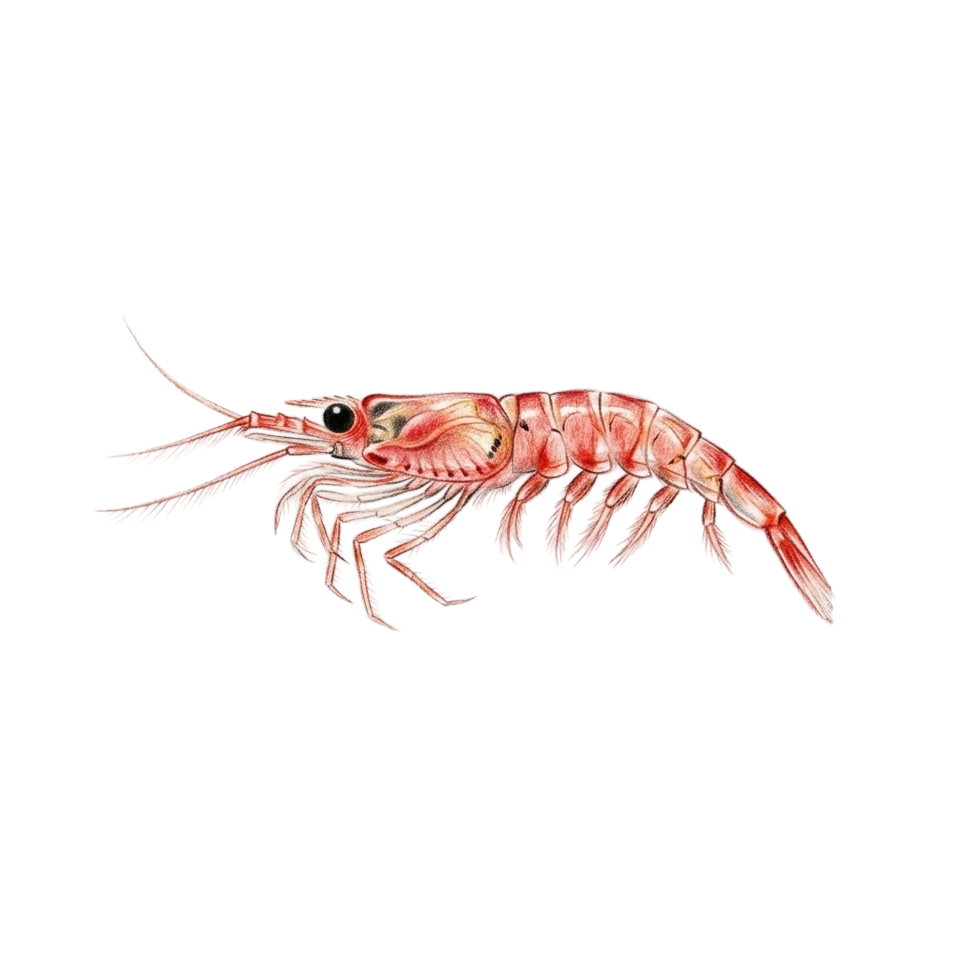
Krill Oil
Krill oil delivers omega-3 fatty acids (EPA and DHA) bound to phospholipids rather than triglycerides (as in fish oil), which may improve absorption and cellular uptake.
- Evidence
- Likely Effective
- Category
- Omega Fatty Acids
- Best form
- Phospholipid-bound omega-3s (standard in krill oil)
- Effective dose
- 1,000-3,000mg krill oil daily
- Lab tested
- 2 of 10 products
- Category
- Omega Fatty Acids
- Best form
- Phospholipid-bound omega-3s (standard in krill oil)
- Effective dose
- 1,000-3,000mg krill oil daily
- Lab tested
- 2 of 10 products
What Is Krill Oil?
Krill oil delivers omega-3 fatty acids (EPA and DHA) bound to phospholipids rather than triglycerides (as in fish oil), which may improve absorption and cellular uptake. It also naturally contains astaxanthin, a potent antioxidant that protects the oil from oxidation.
For lipid profiles, studies show krill oil can reduce triglycerides and potentially increase HDL cholesterol, achieving similar improvements at slightly lower omega-3 doses than fish oil. However, the absolute EPA and DHA per serving is substantially lower than concentrated fish oil, which remains a practical limitation.
For joint health, trials show that krill oil significantly reduces pain scores and inflammation markers in osteoarthritis patients. The combination of omega-3s and astaxanthin may provide additive anti-inflammatory benefits.
The overall evidence is moderate. Krill oil has genuine benefits, but most foundational omega-3 research used fish oil, and krill-specific studies tend to be smaller. The main practical advantages over fish oil are reduced fishy aftertaste and potentially better absorption per milligram of omega-3.
Does It Work? The Evidence
Improves lipid profiles (lowers triglycerides, potentially increases HDL)
Early SignalPooled analysis of ~300 subjects (PMID: 24689440, 26328782): krill oil achieves similar lipid improvements at slightly lower doses vs fish oil due to phospholipid bioavailability
Reduces joint pain and stiffness in osteoarthritis
Early SignalRCT (n=90, PMID: 17353582): 300mg krill oil significantly reduced WOMAC pain scores and CRP levels vs placebo
Reduces systemic inflammation (CRP)
Early SignalMultiple studies (~120 subjects): consistent reductions in C-reactive protein in mild to moderate inflammatory conditions
| Claimed Benefit | Key Studies | Our Verdict |
|---|---|---|
| Improves lipid profiles (lowers triglycerides, potentially increases HDL) | Pooled analysis of ~300 subjects (PMID: 24689440, 26328782): krill oil achieves similar lipid improvements at slightly lower doses vs fish oil due to phospholipid bioavailability | Early Signal |
| Reduces joint pain and stiffness in osteoarthritis | RCT (n=90, PMID: 17353582): 300mg krill oil significantly reduced WOMAC pain scores and CRP levels vs placebo | Early Signal |
| Reduces systemic inflammation (CRP) | Multiple studies (~120 subjects): consistent reductions in C-reactive protein in mild to moderate inflammatory conditions | Early Signal |
How to Choose: Forms, Doses & What Matters
Clinical dose: 1,000-3,000mg krill oil daily; yielding 150-450mg combined EPA+DHA
Best forms: Phospholipid-bound omega-3s (standard in krill oil)
Take with meals to enhance absorption and minimize any potential gastrointestinal discomfort. Can be taken in a single dose or split between morning and evening. Most clinical studies used 1,000-3,000mg of total krill oil daily. The phospholipid-bound form means you may not need as high an EPA/DHA dose as you would with standard fish oil to achieve similar blood levels.
Who Should Take Krill Oil?
Individuals seeking omega-3 benefits who experience fishy aftertaste or GI distress from standard fish oil. People looking for combined omega-3s and mild antioxidant support from naturally occurring astaxanthin. Those looking to manage mild joint stiffness or optimize lipid profiles.
Who Should Avoid It?
Individuals with severe shellfish allergies - this is a critical contraindication as krill are crustaceans. Patients on blood thinners should consult a physician first due to mild anti-platelet effects. Individuals scheduled for surgery within 2 weeks should discontinue use.
Side Effects & Safety
Side effects are generally mild and less frequent than with standard fish oil. The most common include mild gastrointestinal upset and fishy aftertaste or belching (though significantly less common than with fish oil). At high doses, there is potential for a mild increase in bleeding time due to the anti-platelet effects of EPA and DHA.
Product Scores
10 products scored on dosing accuracy, third-party testing, cost per effective dose, and label transparency.
The Scorecard: 10 Products Compared
Krill Oil Supplement with EPA & DHA - 1000mg
Sports ResearchIKOS certified Superba 2 krill oil with excellent label transparency and sustainable sourcing
Prices checked 2026-03-31. Cost shown is per clinically effective daily dose, not per pill.
Neptune Krill Oil 500 mg
NOW FoodsOutstanding value for a properly disclosed krill oil from a reputable brand with good astaxanthin content
Prices checked 2026-03-31. Cost shown is per clinically effective daily dose, not per pill.
Krill Oil 500 mg
Jarrow FormulasUses K-Real multi-stage extraction krill oil, reliable mid-range option with solid transparency
Prices checked 2026-03-31. Cost shown is per clinically effective daily dose, not per pill.
Krill Oil Supplement - 1250mg
Viva Naturals
IKOS certified with the highest astaxanthin yield (1600mcg) among products tested and a high 1250mg total krill oil dose
Prices checked 2026-03-31. Cost shown is per clinically effective daily dose, not per pill.
Pure Antarctic Krill Oil Multi-Benefit Omega-3 1200mg Softgels
Kori
Strong sustainability practices with MSC certification, but slightly lower EPA/DHA yield per gram vs premium competitors
Prices checked 2026-03-31. Cost shown is per clinically effective daily dose, not per pill.
MegaRed Extra Strength 500mg Krill Oil
Schiff
Small easy-to-swallow softgels but significantly underdosed with only 94mg combined EPA/DHA per serving and very low astaxanthin
Prices checked 2026-03-31. Cost shown is per clinically effective daily dose, not per pill.
Antarctic Krill Oil 2000mg
Carlyle
Despite the high 2000mg total krill oil claim, actual EPA/DHA content (120mg) lags significantly behind premium products at similar doses
Prices checked 2026-03-31. Cost shown is per clinically effective daily dose, not per pill.
Antarctic Krill Oil 1000 mg
Bronson
Phospholipid content is surprisingly low (200mg per 1000mg) suggesting potential blending or inferior extraction
Prices checked 2026-03-31. Cost shown is per clinically effective daily dose, not per pill.
Antarctic Krill Oil 1000mg
Dr. Mercola
Higher astaxanthin content (1000mcg) than competitors, but extremely poor value per milligram of EPA/DHA
Prices checked 2026-03-31. Cost shown is per clinically effective daily dose, not per pill.
Antarctic Krill Oil 2000mg
HorbaachProprietary blend completely hides EPA and DHA content, no independent certifications, impossible to evaluate against clinical data
Prices checked 2026-03-31. Cost shown is per clinically effective daily dose, not per pill.
Full Comparison
| Category | Krill Oil Supplement with EPA & DHA - 1000mg Sports Research | Neptune Krill Oil 500 mg NOW Foods | Krill Oil 500 mg Jarrow Formulas | Krill Oil Supplement - 1250mg Viva Naturals | Pure Antarctic Krill Oil Multi-Benefit Omega-3 1200mg Softgels Kori | MegaRed Extra Strength 500mg Krill Oil Schiff | Antarctic Krill Oil 2000mg Carlyle | Antarctic Krill Oil 1000 mg Bronson | Antarctic Krill Oil 1000mg Dr. Mercola | Antarctic Krill Oil 2000mg Horbaach |
|---|---|---|---|---|---|---|---|---|---|---|
| Brand Score | 86/100Winner | 84/100 | 80/100 | 80/100 | 74/100 | 67/100 | 66/100 | 64/100 | 63/100 | 41/100 |
| Dosing & Form | 25/25Winner | 25/25 | 25/25 | 25/25 | 25/25 | 18/25 | 21/25 | 25/25 | 25/25 | 25/25 |
| Purity | 19/25Winner | 13/25 | 13/25 | 19/25 | 13/25 | 13/25 | 7/25 | 7/25 | 13/25 | 7/25 |
| Value | 19/25 | 23/25Winner | 19/25 | 13/25 | 13/25 | 13/25 | 19/25 | 13/25 | 2/25 | 2/25 |
| Transparency | 23/25Winner | 23/25 | 23/25 | 23/25 | 23/25 | 23/25 | 19/25 | 19/25 | 23/25 | 7/25 |
| Cost/Day | $0.57 | $0.35 | $0.52 | $0.83 | $0.74 | $0.64 | $0.47 | $0.66 | $1.93 | $0.00Winner |
| Dose/Serving | 1000mg | 1000mg | 1000mg | 1250mg | 1200mg | 500mg | 2000mg | 1000mg | 1000mg | 2000mg |
| Form | Phospholipid-bound (Superba 2) | Phospholipid-bound (NKO) | Phospholipid-bound (K-Real) | Phospholipid-bound | Phospholipid-bound | Phospholipid-bound | Phospholipid Omega-3 Complex | Phospholipid-bound | Phospholipid-bound | Krill Oil Proprietary Blend |
| Third-Party Tested | ✓ Yes | No | No | ✓ Yes | No | No | No | No | No | No |
| Proprietary Blend | No | No | No | No | No | No | No | No | No | Yes |
Frequently Asked Questions
Is krill oil better than fish oil?
It depends on your priorities. Krill oil's phospholipid-bound omega-3s may be better absorbed per milligram, and it causes less fishy aftertaste. However, concentrated fish oil products deliver significantly more EPA and DHA per serving at a lower cost. For basic omega-3 supplementation at the best price per gram of EPA/DHA, fish oil wins. For tolerability and potentially better absorption, krill oil has advantages.
How much EPA and DHA does krill oil actually provide?
Most 1,000mg krill oil softgels provide only 120-165mg of combined EPA and DHA. This is substantially less than a typical fish oil capsule (300-500mg EPA/DHA per 1,000mg). You may need 2-3 krill oil softgels to match the EPA/DHA content of one concentrated fish oil capsule, though the phospholipid form may partially offset this through better absorption.
Can I take krill oil if I have a shellfish allergy?
This requires extreme caution. Krill are crustaceans, and while the allergenic proteins in shellfish are primarily in the flesh rather than the oil, there is potential for cross-contamination. Most allergists advise against krill oil for individuals with known shellfish allergies. Consult your allergist before use.
What is the astaxanthin in krill oil?
Astaxanthin is a naturally occurring carotenoid antioxidant that gives krill (and salmon, shrimp, and flamingos) their red-pink color. It serves a dual purpose in krill oil supplements: it helps prevent the omega-3s from oxidizing (extending shelf life and freshness) and may provide its own antioxidant benefits. Amounts vary significantly between products, from 17mcg to 1,600mcg per serving.
What does IKOS certification mean for krill oil?
IKOS (International Krill Oil Standards) is a third-party certification program that verifies the purity, potency, and freshness of krill oil products. Products with IKOS certification have been independently tested for heavy metals, oxidation levels, and accurate labeling of EPA/DHA content. It is one of the strongest quality indicators for krill oil.
Is krill oil sustainable?
Antarctic krill is one of the most abundant biomass species on Earth, and krill harvesting is regulated by the Commission for the Conservation of Antarctic Marine Living Resources (CCAMLR). Many premium krill oil brands carry MSC (Marine Stewardship Council) or Friend of the Sea certifications indicating sustainable harvesting practices. Current harvest levels represent less than 1% of estimated biomass.
Related Articles
Sources
- Ulven SM, et al. Metabolic effects of krill oil are essentially similar to those of fish oil but at lower dose of EPA and DHA, in healthy volunteers. Lipids. 2011;46(1):37-46.
- Maki KC, et al. Krill oil supplementation increases plasma concentrations of eicosapentaenoic and docosahexaenoic acids in overweight and obese men and women. Nutr Res. 2009;29(9):609-15.
- Deutsch L. Evaluation of the effect of Neptune Krill Oil on chronic inflammation and arthritic symptoms. J Am Coll Nutr. 2007;26(1):39-48.
- Ramprasath VR, et al. Enhanced increase of omega-3 index in healthy individuals with response to 4-week n-3 fatty acid supplementation from krill oil versus fish oil. Lipids Health Dis. 2013;12:178.
FDA Disclaimer: These statements have not been evaluated by the Food and Drug Administration. The products discussed on this page are not intended to diagnose, treat, cure, or prevent any disease. Always consult with a qualified healthcare professional before starting any supplement regimen.