
Disclosure: We earn commissions on purchases made through our links. This never influences our scores. Editorial policy
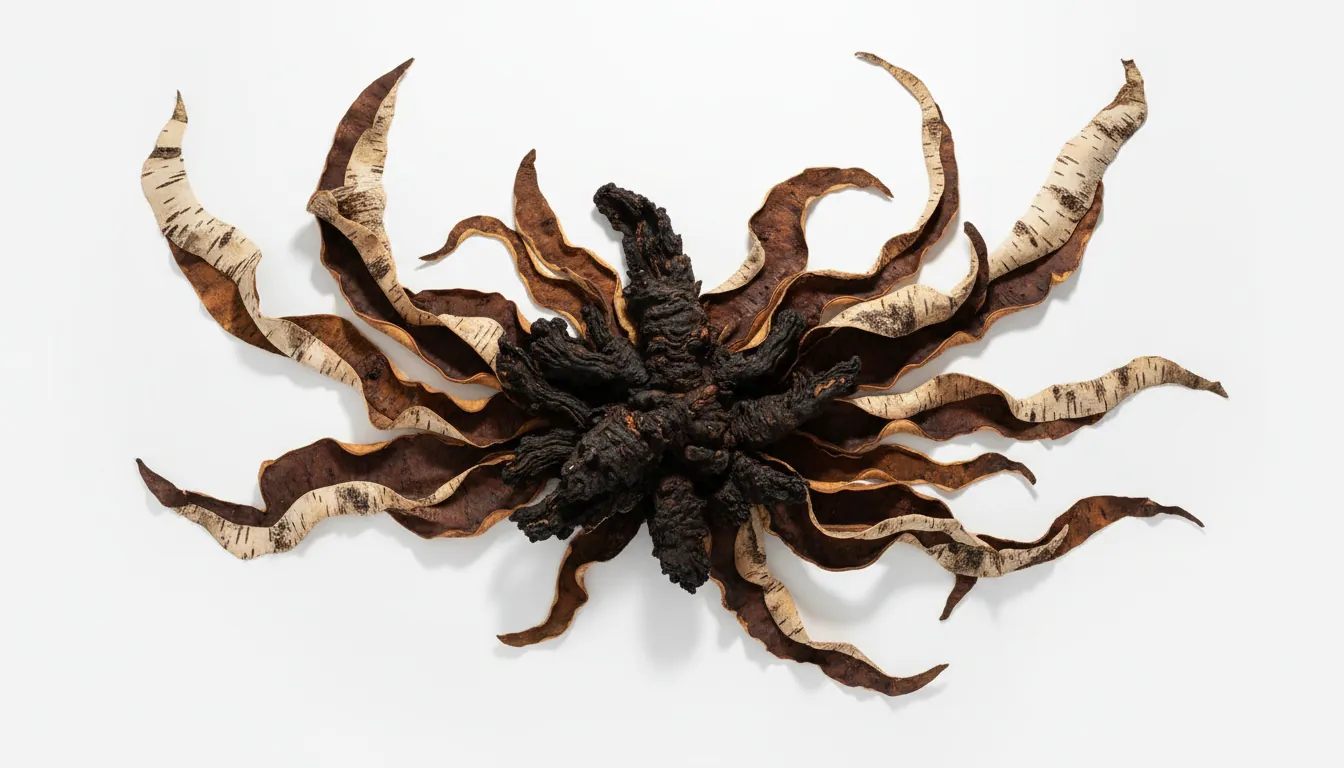
Chaga Mushroom
Bottom line
In our scoring, Chaga Mushroom rates weak evidence: the human evidence is thin for antioxidant activity. Our top-scored product is Chaga Mushroom Capsules (120ct) (85/100), about $0.58 a day at a clinical dose of 1000-2000mg/day of dual-extracted chaga sclerotia. Bottom line: treat any benefit as unproven. This is our opinion, not medical advice; talk to your clinician before starting.
Chaga is a supplement where the marketing has run far ahead of the human data.
- Evidence
- Weak Evidence
- Category
- Immune Support
- Best form
- Hot-water + alcohol dual-extracted sclerotia (the black conk on birch trees) - pulls both water-soluble polysaccharides/beta-glucans and alcohol-soluble triterpenes
- Effective dose
- 1000-2000mg/day of dual-extracted chaga sclerotia, though no dose has been validated in human RCTs
- Lab tested
- 7 of 10 products
- Category
- Immune Support
- Best form
- Hot-water + alcohol dual-extracted sclerotia (the black conk on birch trees) - pulls both water-soluble polysaccharides/beta-glucans and alcohol-soluble triterpenes
- Effective dose
- 1000-2000mg/day of dual-extracted chaga sclerotia, though no dose has been validated in human RCTs
- Lab tested
- 7 of 10 products
Key takeaways
- →Almost all chaga claims rest on cell and rodent data. Human RCTs are essentially absent across every marketed indication.
- →Real safety concern: chaga is high in oxalates and case reports document kidney failure in chronic users, especially with diabetes.
- →Use dual-extracted (water plus alcohol) sclerotia. Avoid mycelium-on-grain products, which are mostly cooked grain.
- →Skip if you have kidney disease, oxalate stones, diabetes, or take blood thinners. Wild-harvest sustainability is also a real issue.
What Is Chaga Mushroom?
Chaga is a supplement where the marketing has run far ahead of the human data. Almost everything you read about chaga - anticancer, immune-modulating, blood-sugar-lowering, anti-inflammatory - comes from cell culture studies and rodent models, not controlled trials in people. There is one small ex-vivo study (Park 2004) showing chaga extract reduced oxidative DNA damage in human lymphocytes by about 40%, and that is essentially the strongest direct human-cell signal in the published literature. Memorial Sloan Kettering's herb monograph states plainly that "the safety and efficacy of chaga have yet to be evaluated in clinical studies."
The chemistry is real and interesting. Chaga sclerotia (the black, charcoal-like conks that grow on living birch) contain very high concentrations of melanin, polyphenols, beta-glucans, and triterpenes including betulin and betulinic acid absorbed from the host birch. ORAC values are among the highest measured for any food, and Glamoclija et al. 2015 confirmed strong in-vitro antioxidant and antimicrobial activity across samples from Finland, Russia, and Thailand. The leap from "high ORAC in a test tube" to "meaningful health outcome in a human" is the leap that has not been made.
Two practical buyer issues matter more than the evidence question. First, extraction. The bioactive compounds split between water-soluble (polysaccharides, beta-glucans) and alcohol-soluble (triterpenes, betulinic acid) fractions. A hot-water-only extract leaves the triterpenes behind. A dual-extracted product (hot water plus alcohol) captures both. Second, mycelium-on-grain. Many cheaper "chaga" products are not chaga conk at all - they are mycelium grown on a grain substrate (usually oats or brown rice), and the finished product is mostly cooked grain with trace mycelium. These products have a fraction of the beta-glucans and triterpenes of true sclerotia extracts and should be avoided if you are paying for chaga.
The most important safety issue is oxalate nephropathy. Chaga is unusually high in oxalates - oxalic acid is its principal organic acid (Glamoclija 2015). Multiple case reports document kidney damage in chronic users. Kikuchi et al. 2014 reported a 72-year-old who developed end-stage renal failure requiring dialysis after 6 months of daily chaga powder. Lee et al. 2020 reported end-stage renal disease in a 49-year-old after long-term chaga, with the consumed powder testing at 14.2 g oxalate per 100 g. Anyone with chronic kidney disease, a history of calcium oxalate kidney stones, or diabetes (the population most often using chaga as folk medicine) should not take this supplement, period.
The wild-harvest sustainability problem is also real. Chaga is parasitic on living birch and takes 5-20 years to form a harvestable conk. Removing the entire conk eliminates the fungus's reproductive future at that site. Poland legally protects wild chaga, Finland enforces harvest quotas, and foresters in Canada and the Baltics report declining wild populations. The species is not formally IUCN-endangered globally, but local depletion is documented. Cultivated chaga essentially does not exist at scale - the few "farmed" products use submerged mycelium culture that is not the same product as the wild sclerotium.
Bottom line: if you want a daily antioxidant supplement with a meaningful evidence base, chaga is not the right pick. If you want to try it for traditional reasons or general wellness, use a dual-extracted sclerotia product, keep doses modest, take periodic breaks, and absolutely do not use it if you have any kidney concern.
Does It Work? The Evidence
How A-F grades workChaga Mushroom earns a Weak Evidence rating - human evidence is thin across its claimed uses, the best-supported being antioxidant activity (in-vitro and ex-vivo human cells) (grade C). Each claim is graded individually below.
Antioxidant activity (in-vitro and ex-vivo human cells)
Park et al. 2004 ex-vivo study: ~40% reduction in H2O2-induced DNA fragmentation in human lymphocytes; Glamoclija et al. 2015: strong in-vitro antioxidant and antimicrobial activity across multiple samples
Immune modulation
Multiple in-vitro and rodent studies show macrophage activation and cytokine effects from chaga polysaccharides; no controlled human trials demonstrating clinical immune outcomes
Anticancer effects
Extensive cell-line cytotoxicity data and rodent tumor models reviewed by Duru et al. 2019 and Camilleri et al. 2024; zero published human RCTs in cancer patients
Blood sugar and metabolic effects
Rodent studies show hypoglycemic activity in diabetic models; no human trials. Caution advised if combined with antidiabetic medications
Anti-inflammatory and IBD claims
Animal colitis models show reduced inflammatory markers; commonly cited human IBD trial claims do not hold up to source verification
General fatigue and adaptogen claims
No controlled human trials in healthy adults for energy, fatigue, or stress endpoints. Marketing claims rest on traditional Russian/Siberian folk use
| Grade | Claimed Benefit | Key Studies | Our Verdict |
|---|---|---|---|
| C | Antioxidant activity (in-vitro and ex-vivo human cells) | Park et al. 2004 ex-vivo study: ~40% reduction in H2O2-induced DNA fragmentation in human lymphocytes; Glamoclija et al. 2015: strong in-vitro antioxidant and antimicrobial activity across multiple samples | Early Signal |
| D | Immune modulation | Multiple in-vitro and rodent studies show macrophage activation and cytokine effects from chaga polysaccharides; no controlled human trials demonstrating clinical immune outcomes | Not There Yet |
| D | Anticancer effects | Extensive cell-line cytotoxicity data and rodent tumor models reviewed by Duru et al. 2019 and Camilleri et al. 2024; zero published human RCTs in cancer patients | Not There Yet |
| D | Blood sugar and metabolic effects | Rodent studies show hypoglycemic activity in diabetic models; no human trials. Caution advised if combined with antidiabetic medications | Not There Yet |
| D | Anti-inflammatory and IBD claims | Animal colitis models show reduced inflammatory markers; commonly cited human IBD trial claims do not hold up to source verification | Not There Yet |
| F | General fatigue and adaptogen claims | No controlled human trials in healthy adults for energy, fatigue, or stress endpoints. Marketing claims rest on traditional Russian/Siberian folk use | Not There Yet |
Chaga Mushroom Dosage: How Much to Take
Chaga Mushroom dosage, in one line: the evidence-supported range is 1000-2000mg/day of dual-extracted chaga sclerotia, though no dose has been validated in human RCTs.
Clinical dose: 1000-2000mg/day of dual-extracted chaga sclerotia, though no dose has been validated in human RCTs
Best forms: Hot-water + alcohol dual-extracted sclerotia (the black conk on birch trees) - pulls both water-soluble polysaccharides/beta-glucans and alcohol-soluble triterpenes, Hot-water-only sclerotia extract - water-soluble fraction only, no triterpenes or betulinic acid, Wild-harvested sclerotia (most products - sustainability concern in some regions), Avoid: mycelium grown on grain (oats, brown rice) - the finished product is mostly grain starch and lacks the sclerotium-specific compounds
Take 1000-2000mg daily of a dual-extracted sclerotia product, typically split into two doses. Take with food to improve tolerability. Tea preparation requires long simmering (60-90 minutes) of dried chunks in hot water - this extracts the water-soluble fraction only and misses the triterpenes. Most published case reports of kidney damage involve chronic high-dose daily use over many months, so consider cycling on for 8-12 weeks and off for 2-4 weeks rather than uninterrupted long-term use. If you have any kidney concern, do not take it at all. Stop and check with a doctor if you notice any change in urinary patterns, swelling, or fatigue.
Who Should Take Chaga Mushroom?
Adults curious about traditional adaptogenic mushrooms who understand the human evidence is thin and want a high-antioxidant addition to their routine. People who already drink chaga tea and want a more concentrated form. Anyone choosing chaga should select a dual-extracted sclerotia product, keep doses at the lower end, and take periodic breaks rather than uninterrupted daily use for years.
Who Should Avoid It?
Not for everyone
Side Effects & Safety
Product Scores
10 products scored on dosing accuracy, third-party testing, cost per effective dose, and label transparency.
The Scorecard: 10 Products Compared
Chaga Mushroom Capsules (120ct)
Real Mushrooms
$34.95 ÷ 60 days at 1000mg/day (1 serving × 1000mg)
Real Mushrooms is run by mycologist Skye Chilton and publishes beta-glucan and starch test results - the gold standard for sclerotia verification
Prices checked 2026-06-11. Cost shown is per clinically effective daily dose, not per pill.
Chaga Mushroom Powder (60g, 60 servings)
Real Mushrooms
$34.95 ÷ 60 days at 1000mg/day (1 serving × 1000mg)
Same sourcing and testing as the Real Mushrooms capsules but in flexible powder form for those who prefer to dose into a drink
Prices checked 2026-06-11. Cost shown is per clinically effective daily dose, not per pill.
Chaga Capsules 14:1 Fruiting Body Extract (120ct)
FreshCap
$39.99 ÷ 60 days at 500mg/day (1 serving × 500mg)
FreshCap is one of the few brands that publishes alpha-glucan content alongside beta-glucan, which is the most direct way to verify a sclerotia product is not grain-contaminated
Prices checked 2026-06-11. Cost shown is per clinically effective daily dose, not per pill.
Super Chaga (120 tablets)
Mushroom Wisdom
$30.48 ÷ 40 days at 900mg/day (3 servings × 300mg)
Long-running US supplement brand specialized in medicinal mushrooms, with origins as Maitake Products in the 1990s
Prices checked 2026-06-11. Cost shown is per clinically effective daily dose, not per pill.
Chaga Mushrooms Capsules 1000mg (120ct)
Double Wood Supplements$14.95 ÷ 60 days at 500mg/day (1 serving × 500mg)
Cheapest entry point but whole-powder format means actives per capsule are likely far below extract-based products from Real Mushrooms or Nootropics Depot
Prices checked 2026-06-11. Cost shown is per clinically effective daily dose, not per pill.
Fermented Chaga Mushroom 1000mg (60 VegCaps)
Solaray
$28.49 ÷ 30 days at 1000mg/day (1 serving × 1000mg)
Solaray's fermented approach is a different processing path than the standard hot-water or dual extraction used in the chaga research literature
Prices checked 2026-06-11. Cost shown is per clinically effective daily dose, not per pill.
Chaga Capsules (60ct, mycelium on rice)
Host Defense
$25.46 ÷ 30 days at 500mg/day (1 serving × 500mg)
Host Defense's mycelium-on-grain approach is a deliberate philosophical choice (Stamets argues mycelium has unique compounds), but it is not the same product as sclerotia extract and the chaga research literature is built on sclerotia
Prices checked 2026-06-11. Cost shown is per clinically effective daily dose, not per pill.
Chaga Mushroom Capsules (90ct, mycelium on oats)
Om Mushrooms
$22.95 ÷ 30 days at 500mg/day (1 serving × 500mg)
Om uses cultured mycelium-on-grain like Host Defense - same trade-off applies (transparent label but the substrate dilutes the actual mushroom content)
Prices checked 2026-06-11. Cost shown is per clinically effective daily dose, not per pill.
Chaga Mushroom Capsules 500mg (60ct)
Nootropics Depot$14.99 ÷ 30 days at 1000mg/day (2 servings × 500mg)
Good entry point if you want to test tolerability before committing to a larger Nootropics Depot bottle
Prices checked 2026-04-27. Cost shown is per clinically effective daily dose, not per pill.
Chaga Mushroom Capsules 500mg (180ct)
Nootropics Depot$48.99 ÷ 91 days at 1000mg/day (2 servings × 500mg)
Nootropics Depot is widely respected for rigorous identity testing on every botanical and mushroom product they sell
Prices checked 2026-06-11. Cost shown is per clinically effective daily dose, not per pill.
Full Comparison
| Category | Chaga Mushroom Capsules (120ct) Real Mushrooms | Chaga Mushroom Powder (60g, 60 servings) Real Mushrooms | Chaga Capsules 14:1 Fruiting Body Extract (120ct) FreshCap | Super Chaga (120 tablets) Mushroom Wisdom | Chaga Mushrooms Capsules 1000mg (120ct) Double Wood Supplements | Fermented Chaga Mushroom 1000mg (60 VegCaps) Solaray | Chaga Capsules (60ct, mycelium on rice) Host Defense | Chaga Mushroom Capsules (90ct, mycelium on oats) Om Mushrooms | Chaga Mushroom Capsules 500mg (60ct) Nootropics Depot | Chaga Mushroom Capsules 500mg (180ct) Nootropics Depot |
|---|---|---|---|---|---|---|---|---|---|---|
| Brand Score | 85/100Winner | 84/100 | 81/100 | 78/100 | 72/100 | 70/100 | 62/100 | 61/100 | 80/100 | 80/100 |
| Dosing & Form | 25/25Winner | 25/25 | 22/25 | 19/25 | 20/25 | 22/25 | 14/25 | 14/25 | 22/25 | 22/25 |
| Purity | 22/25Winner | 22/25 | 22/25 | 19/25 | 16/25 | 16/25 | 19/25 | 17/25 | 22/25 | 22/25 |
| Value | 18/25 | 17/25 | 14/25 | 21/25Winner | 19/25 | 13/25 | 14/25 | 15/25 | 16/25 | 16/25 |
| Transparency | 20/25 | 20/25 | 23/25Winner | 19/25 | 17/25 | 19/25 | 15/25 | 15/25 | 20/25 | 20/25 |
| Cost/Day | $0.58 | $0.58 | $0.67 | $0.76 | $0.25Winner | $0.95 | $0.85 | $0.77 | $0.50 | $0.54 |
| Price checked | 2026-06-11 | 2026-06-11 | 2026-06-11 | 2026-06-11 | 2026-06-11 | 2026-06-11 | 2026-06-11 | 2026-06-11 | 2026-04-27 | 2026-06-11 |
| Dose/Serving | 1000mg | 1000mg | 500mg | 300mg | 500mg | 1000mg | 500mg | 500mg | 500mg | 500mg |
| Form | Hot-water extract from sclerotia (no grain, no mycelium) | Hot-water extract powder from sclerotia | 14:1 hot-water extract from sclerotia, standardized to 15% beta-glucans | Hot-water extract from Siberian birch chaga sclerotia | Whole chaga mushroom powder (not extract) | Fermented organic chaga mushroom (proprietary fermentation process) | Chaga mycelium with myceliated brown rice (NOT sclerotia) | Chaga mycelial biomass cultured on organic oats (NOT sclerotia) | Hot-water extract from organic sclerotia | Hot-water extract from organic sclerotia |
| Third-Party Tested | ✓ Yes | ✓ Yes | ✓ Yes | No | ✓ Yes | No | No | ✓ Yes | ✓ Yes | ✓ Yes |
| Proprietary Blend | No | No | No | No | No | No | No | No | No | No |
Product prices and availability are accurate as of the date indicated and are subject to change. Any price and availability information displayed on Amazon.com at the time of purchase will apply.
Frequently Asked Questions
Is chaga mushroom safe to take long-term?
We are honestly not sure, and there are good reasons for concern. The published kidney-damage case reports all involve long-term daily users (typically 6 months or more of consistent use). Chaga is high in oxalates, and chronic loading of oxalates is the suspected mechanism. There are no published long-term safety trials in healthy humans. If you choose to take it, cycle (8-12 weeks on, 2-4 weeks off) rather than indefinite daily use, and avoid it entirely if you have any kidney issue, kidney stone history, or diabetes.
What is the chaga kidney stone concern, exactly?
Chaga sclerotia contain very high levels of oxalic acid - it is the principal organic acid in the mushroom. When you absorb large amounts of oxalate over time, calcium oxalate crystals can deposit in the kidney tubules and cause oxalate nephropathy. Kikuchi et al. 2014 described a 72-year-old whose kidneys failed after 6 months of daily chaga, and Lee et al. 2020 reported a 49-year-old who progressed to end-stage renal disease. The chaga powder in the Lee case tested at 14.2 g oxalate per 100 g of powder, which is extremely high. People with diabetes, chronic kidney disease, or a history of kidney stones are at the highest risk.
Fruiting body vs mycelium on grain - which should I buy?
Buy the sclerotium (the black conk that grows on birch). Many cheaper chaga products are not chaga conk at all - they are mycelium grown on a grain substrate, usually oats or brown rice, and the finished product is mostly cooked grain with trace mycelium. These contain a small fraction of the beta-glucans, triterpenes, and melanin pigments of true sclerotia. Look for labels that specify 'sclerotia,' 'fruiting body equivalent,' or '100% mushroom, no grain/starch/mycelium fillers.' Real Mushrooms, FreshCap, Nootropics Depot, Mushroom Wisdom, and Birch Boys all use sclerotium. Host Defense and Om Mushroom use mycelium grown on grain - that is a deliberate product choice and is disclosed on their labels, but it is not the same product.
Chaga has the highest ORAC of any food. Does that translate to health benefits?
Probably not, and this is one of the most over-marketed points about chaga. ORAC is a chemistry assay that measures how well an extract neutralizes free radicals in a test tube. The USDA actually pulled its ORAC database in 2012 because the values do not predict antioxidant effects in the human body. Polyphenols and melanins from food are extensively metabolized in the gut and liver, and serum antioxidant capacity does not move much with high-ORAC foods. The dietary antioxidant story has been substantially refuted across nutrition science. Chaga's chemistry is genuinely interesting, but 'high ORAC' is not a meaningful health claim.
Is wild-harvested chaga sustainable?
Honestly, often no. Chaga is parasitic on living birch and takes 5-20 years to form a harvestable conk. Most commercial harvesting removes the entire visible conk, which eliminates the fungus's ability to reproduce at that site. Poland has legal protections for wild chaga, Finland enforces harvest quotas, and foresters in Canada, Estonia, and Latvia report declining wild populations. The species is not formally IUCN-endangered globally, but local depletion is documented. If sustainability matters to you, look for brands that disclose specific harvest regions and quota practices (Birch Boys publishes their Adirondack acreage and harvest method) or accept that small sustainable supply will cost more than mass-market wild Russian or Chinese chaga.
Can chaga interact with medications?
Yes, and the interactions matter. Chaga has anti-platelet activity, so combining it with warfarin, clopidogrel, aspirin, or other blood thinners may increase bleeding risk. Chaga has hypoglycemic activity in animal studies, so combining it with insulin, metformin, or other antidiabetic drugs may produce additive blood-sugar lowering. Discontinue chaga at least 2 weeks before any planned surgery. Avoid chaga if you take immunosuppressants. Always check with your doctor before starting if you take any prescription medication.
Chaga tea vs capsules vs tincture - does form matter?
Yes. Hot-water tea (long simmer of dried chunks) extracts only water-soluble compounds - polysaccharides and beta-glucans, but not the alcohol-soluble triterpenes (betulin, betulinic acid). A dual-extracted tincture or capsule (water plus alcohol) captures both fractions. Capsules and powders should specify 'dual-extracted' or list both extraction methods. If you prefer tea, that is fine - just understand you are getting the water-soluble half of the chemistry. Avoid raw chaga powder swallowed in capsules without extraction, as the cell walls of the sclerotium are not well digested and most of the bioactives are not bioavailable without extraction.
What is the right Chaga Mushroom dosage?
The evidence-supported range is 1000-2000mg/day of dual-extracted chaga sclerotia, though no dose has been validated in human RCTs. Take 1000-2000mg daily of a dual-extracted sclerotia product, typically split into two doses. See the dosage section above for timing and form details, and talk to your clinician about the right dose for you.
Head-to-Head Comparisons
Sources
- Park YK, Lee HB, Jeon EJ, Jung HS, Kang MH. Chaga mushroom extract inhibits oxidative DNA damage in human lymphocytes as assessed by comet assay. Biofactors. 2004;21(1-4):109-12.
- Glamoclija J, Ciric A, Nikolic M, et al. Chemical characterization and biological activity of Chaga (Inonotus obliquus), a medicinal 'mushroom'. J Ethnopharmacol. 2015;162:323-32.
- Kikuchi Y, Seta K, Ogawa Y, et al. Chaga mushroom-induced oxalate nephropathy. Clin Nephrol. 2014;81(6):440-4.
- Lee S, Lee HY, Park Y, et al. Development of End Stage Renal Disease after Long-Term Ingestion of Chaga Mushroom: Case Report and Review of Literature. J Korean Med Sci. 2020;35(19):e122.
- Duru KC, Kovaleva EG, Danilova IG, van der Bijl P. The pharmacological potential and possible molecular mechanisms of action of Inonotus obliquus from preclinical studies. Phytother Res. 2019;33(8):1966-1980.
- Camilleri E, Blundell R, Baral B, et al. A brief overview of the medicinal and nutraceutical importance of Inonotus obliquus (chaga) mushrooms. Heliyon. 2024;10(15):e35638.
- Memorial Sloan Kettering Cancer Center. Chaga Mushroom - Integrative Medicine Herb Monograph.
Scores and tiers are our independent opinion, formed by applying a published rubric to label data, third-party certifications, and the research record. They are not statements of objective fact about a product and not a lab test. Where we report a brand-specific fact, it comes from a cited source or a public certification; where verification is missing, we say so rather than assume a result.
FDA Disclaimer: These statements have not been evaluated by the Food and Drug Administration. Dietary supplements are not intended to diagnose, treat, cure, or prevent any disease. Always consult with a qualified healthcare professional before starting any supplement regimen.